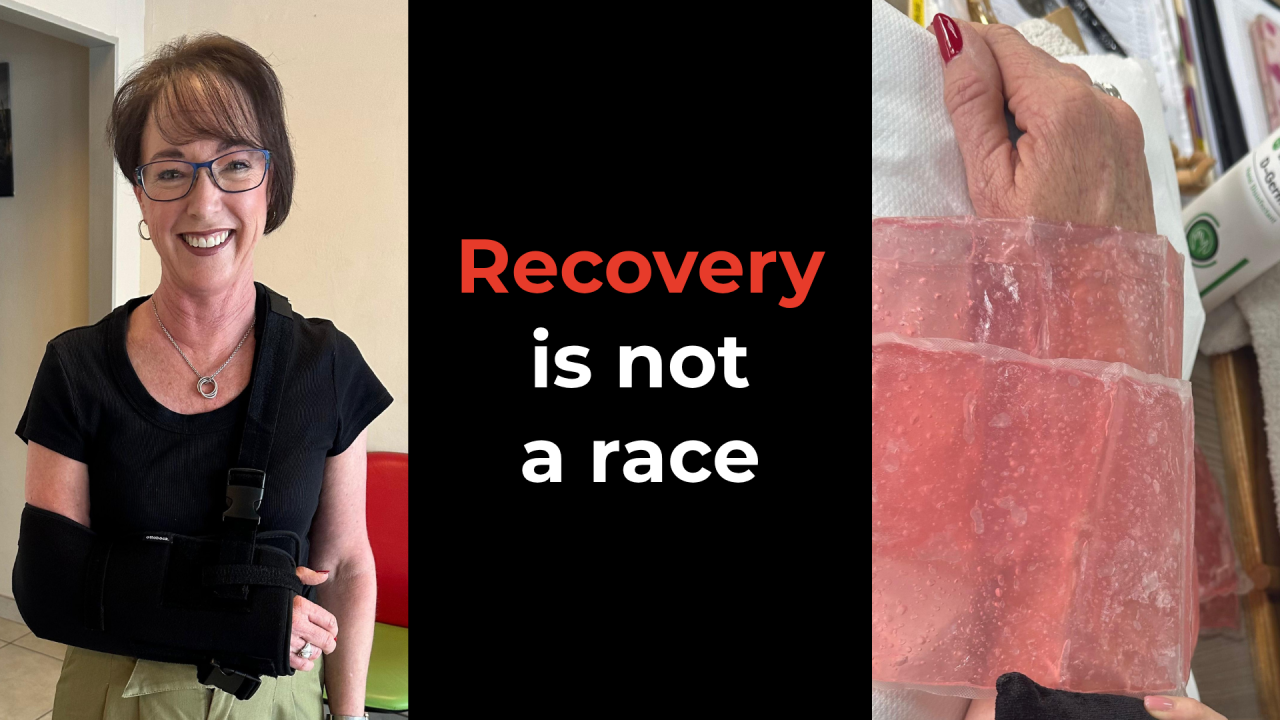
It’s been 12 weeks. 12 weeks of not using my right arm and wrist. 12 weeks out of the gym, 12 weeks of constantly being strapped, wearing a wrist brace and a sling to immobilise me. 12 weeks of slow, measured and intentional recovery from what’s commonly referred to as a snappy ECU. In English, it means a torn tendon on the outside of the wrist and it’s on my dominant hand, to add insult to injury.
The cause? A social game of padel,a game that’s keeping surgeons and physios very busy with snap injuries! I was incapacitated, unable to rotate my wrist or do any flexion or extension activities. In the first four weeks I couldn’t even use my fingers.
I’ve had to learn how to live within the constraints that my healing has necessitated as it is the worst form of wrist injury you can get. I am told by the surgeon and hand injury occupational therapist that it would have been better to have broken my wrist.
Lessons from my injury
It has been interesting to observe my rehabilitation process. I was mad at myself for getting injured. I was exhausted and probably shouldn’t have accepted the invitation to play when someone fell out of the regular foursome and I filled in. My reflexes were slow which led to me making a silly move on the court that caused the injury.
LESSON: Listen to your body and listen to other people who hold a mirror up for you, in this case that I was tired and should have been in bed. They might just be right!
I had to learn how to disengage my arm and pretend it didn’t exist so as to not strain or further injure it in any way.Easier said than done. Eight weeks on, I thought I was strong enough to stir a pot on the stove and pack the dishwasher because my wrist felt good. I strained the tendon higher up, and had to go back into the sling all over again. The second time around was easier though, because I knew how to switch off the brain-body connection and lean into my temporary disability.
LESSON: Don’t rush healing. The body needs time. When you rush you create setbacks.
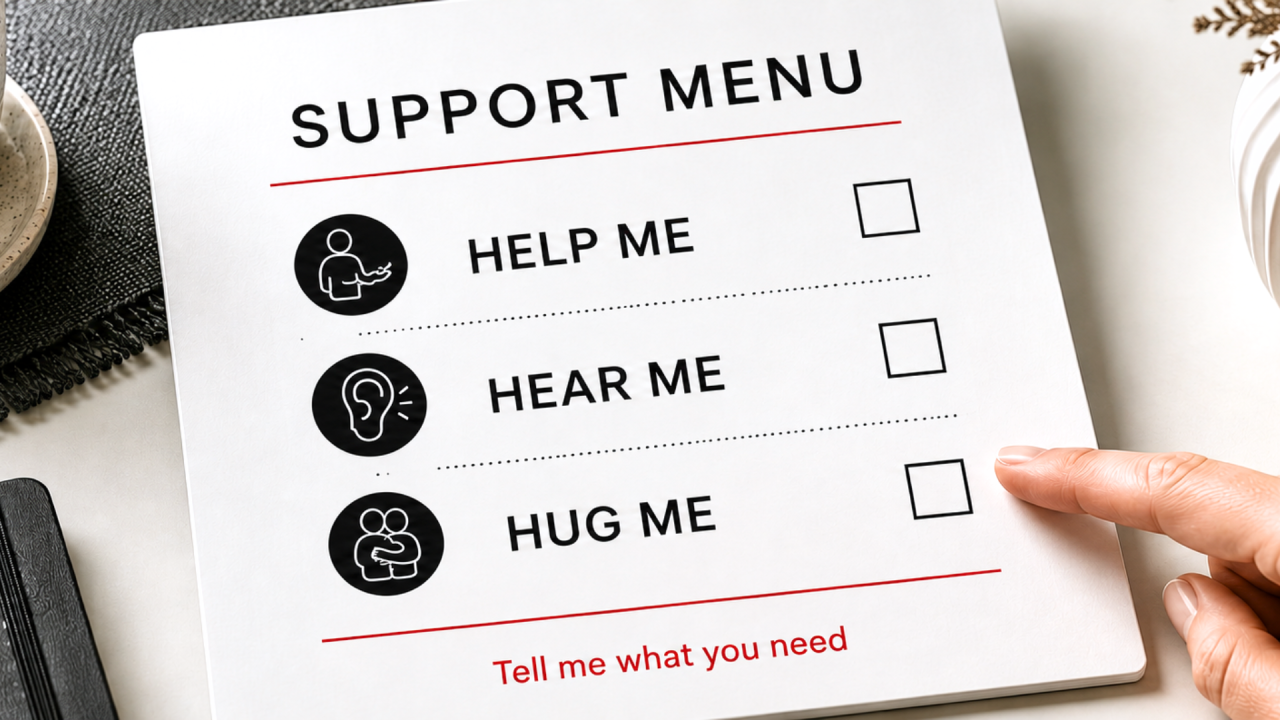
I had to ask for help and make myself supportable with both the big and the little things that need to get done in everyday life. From not driving to not carrying bags, or cooking, washing the dishes or wiping down the counters, and not picking up anything with my right hand. I couldn’t write, type or blow dry my hair and had to sleep at a strange angle.
LESSON: If you can clearly articulate what you need and are not afraid to ask for it, support will be there on tap. My sons came to the party with blow drying my hair for speaking events. In fact, my eldest would have got a standing ovation if he had been in the room.
I had to teach my left hand to do the stuff my right hand would normally do. Now that messes with your head like trying to write or put on lipliner with the wrong hand! I have great respect for anyone who has permanently lost the use of their dominant hand and has retrained their brain and body. Initially everything feels incredibly clumsy but, with practise, you get better and better as you keep greasing the new groove.
LESSON: Your brain is so plastic and elastic that it can learn, unlearn and relearn anything if you are prepared to put in the time and effort to do so. This is the miracle of neuroplasticity.
I learnt how to make a plan and work around things like ditching a bath towel for a hand towel, taking Ubers instead of driving, pushing things open with my forearm, letting people cut up my food for me and blowdry my hair before speaking at events.
LESSON: We need to be resilient, flexible and adaptable in the face of disruption and change finding new ways to do things.
I had to slow down and allow more time for everything! This was hard for me as I like to multi-task and do things at speed.
LESSON: Perhaps this has been the overarching lesson from the whole experience – slow down!
Frustration and fascination
I was so frustrated and yet fascinated by my experience that I did a full radio interview where I used my injury to explain the process of learning, unlearning and relearning. You can listen here. It’s a good one. I hope it gives you insight.
As a human potential expert with deep experience and understanding of the brain-body connection, how humans learn and how the body is the architect of the brain, I was fascinated by my ability to learn, unlearn and relearn so that my injury didn’t stop me in my tracks.
LESSON: Reframing what had had happened to me as a pause on my way, not in my way, was important to avoid becoming a helpless victim of circumstance.
Thank you to everyone who has supported me on this journey. We are nearly there. I have permission from my hand OT to use 1kg and 2kg weights in the gym from next week. Things are starting to feel normal again.
LESSON: Listen to your therapist. Be gentle with yourself. And therapists often know more than surgeons about the practicalities of everyday life and how to get around them with an injury.
Much love

Human Potential Expert
Recent Posts
Categories
About the Author, Nikki Bush

Award-winning speaker and best-selling author, Nikki Bush, helps individuals and teams to win at life and work. Her passion for connection and relationships, and how to maintain them in a fast-changing world, is at the core of everything she does as a human potential thought leader.